Canadian-Money-Advisor.ca BLOG
What is a credit card - 2 ?
There are millions of credit cards in Canada, that come in all flavors and sizes. This article will help explain various aspects of what is a credit card.
Who provides credit cards? Plastic money, as it's called, is provided by companies who specialize in managing vast amounts of purchases by millions of people in countries around the world. A credit card companie must have the computer systems and database systems to be able to manage the individuals current personal and credit information, and help perform instant lending transactions.
This "systems lender" makes its money by annual fees charged to the vendor each time a purchase is made, along with interest fees charged, and service fees charge to the individual customers.
Who uses credit cards? Anybody who is of the age of majority who is able to sign legal agreement is able to have a charge card. Business people and individuals alike use credit cards for travel expenses, household purchases, electronics, online purchases, groceries etc. Pretty much everything can be bought with the instant loan card.
What types of credit cards are there? There are high interest cards, low interest cards, travel reward cards, line of credit cards, and other types of reward points cards. Credit cards themselves are usually made of thin plastic that you can fit in your wallet. Each company has a different logo and identifying and security marks to protect the customer. Each card has an electronic strip so that you can swipe it when making a purchase. The electronic strip holds your information which is instantly sent to the credit card processor which either approves or declines your purchase.
Where can I use a credit card? Convenience cards can be used at pretty much every retail store, restaurant, hotel, airline and online store around the world. It's good to ask a retailer which brands they take before making a purchase. Some retailers will take Visa and Mastercard, but not American Express. The beauty of carry a travelling charge card is that you can use them all over the world. Again, if you're travelling, you may want to call ahead to ensure that the countries and retailers, hotels etc use your credit card before you take your trip. I've heard of cases where people have gone on a trip and have been left cashless because they took the wrong credit cards.
When can I get a credit card? All Canadian banks offer their own version of Mastercard or Visa. They even offer American Express. There are other retailers like Canadian Tire, Capital One, MBNA that offer "independent" credit agreements.
Why do people use credit cards? People use credit cards for various reasons: 1) They don't want to carry cash with them. 2) They want to collect rewards points & cash back points. 3) They like other peoples money for as long as possible. 4) They are short of cash and need a loan to make purchases. 5) They want to buy something online in a secure fashion. That is the beauty of this type of loan facility. It offers flexibility and convenience.
How do I get a credit card You can go to a bank or credit union and go through the paper credit card application process. You can apply at retailers that have their own credit cards. You can apply online for cards such as Capital One. You need to ensure that your credit history and credit score will be within the requirements of the creditor. If you're not sure what this means, give your credit card company a call and ask them what qualifications such as credit history they will ask for to be approved for their various plastic money products.
SEE ALSO
References
External Links
Comments (0)
CMA Blog Home
What is a Collection CallA collection call happens when a collection agent, working at a collection agency calls a debtor who is behind on payments as according to the terms and conditions of the credit agreement.
Who Makes Collection Calls?
Only Provincially licensed collection agents who are working at Provincially licensed collection agencies are allowed to make collection calls.
These third party collection agencies should have written agreements with creditors to collect debts that are past due or where payments have stopped
Who Receives Collection Calls?
An individual who is behind in making payments, or stopped payments altogether will receive notifications by telephone, or mail from a licensed firm.
In the agreement the debtor signed, they've allowed the creditor to use a third party bill collector should they not make payments up to date and as agreed to.
Where is a Collection Call Made to?
A collection call can be made to the individual's home, or to their place of employment. Agents will call all sorts of places trying to locate the debtor, if the debtor's contact records are out of date.
Usually a collection call is made to the debtors home, and there are rules and regulations that need to be followed by the debt manager. Each province has regulations that limit where and when a call can be made.
When is a Collection Call Made?
Contacting a debtor should usually be done at reasonable hours. Usually the hours are between 8 am and 9 pm, the same times that telephone solicitors are allowed to call.
Each province has different regulations on when collection calls are allowed. Most times collection personnel are not allowed to call on weekends or holidays and at certain hours.
Why are Collection Calls Made?
There is an agreement set in place between the debtor and the creditor. In short, the debtor borrows money from the creditor and agrees to make interest and principal payments at agreed times.
If these payments are not made, that usually triggers collection activities.
As to why the borrower isn't making payments could range from pure neglect to the fact that they just lost their job, or acquired an illness and their cash income has been cut off.
A creditor's income is the interest it charges to the borrower. It must be able to control the payments coming in from it's customers.
Understanding that it's customers payments are not always going to be smooth and steady, it has to use a system to encourage prompt payments. This ensures that the creditors cash flow is in tact.
How are Collection Calls Made?
When the payments are not made by the debt, the creditor's computer system flags the late payments automatically and then these database records are sent (hopefully securely) to the collection agencies computer system.
These days, collection agencies are usually automated with powerful computer systems and data management systems.
Many times collectors are based in call centers with several employers. Using an automated dialling system, the collection agent makes several calls over the course of a day. The more efficient the telephone and data system, the more calls can be made by the debt management company.
Collection calls are regulated by each province. If you're having more questions or problems please contact your local consumer protection for advice on how to deal with individuals and companies that work for creditors to herd in their payments.
Comments (0)
CMA Blog Home
Michael Jackson - The machine was too much Despite how weird and uninteresting I thought Michael Jackson had become, I watched the news yesterday, as it was interesting on a business and personal finance level. The news agencies reported that Michael Jackson owed $500 million or 1/2 billion dollars, and that these debts were backed up by all of his musical and real estate assets and incomes.
I'm absolutely dumbfounded that an individual can owe $500 million. They had Michael Jackson's business consultant on CNBC this morning and the consultant mentioned that he had helped Jackson from avoiding bankruptcy in 2004.
The Machine is too big for an individual. In my opinion, Michael Jackson was on so many drugs, reports include demerol and morphine, just to avoid his life and his debt responsibilities.
He had a major tour scheduled in London and the revenue was reported at $50 million for 50 days. If the star is on that many drugs, and in that rough of shape, would he be able to even do a tour? The point that I'm getting at is this: business and individuals are great at building structures these days. But we're building things that are too large to handle. The banking system almost failed because it was too large for even the government to handle. In Michael Jackson's case, it seems that his empire was way too large for him to handle.
TOO BIG TO FAIL?!! This is certainly a attribute of our society these days. It seems that there are many companies that are too large to fail, including General Motors and AIG Insurance.
Many individuals have taken on considerable amounts of debt in their lifestyle, and it's causing structural problems for themselves and their families. Too much debt can be a problem if your health suffers, and you begin to lose control on how to make payments on the debt. I think this is definitely the case with Michael Jackson - especially since his debt was an unbelievable $500 million
Comments (1)
CMA Blog Home
What is an annual percentage rate (APR) Annual Percentage rate is calculated on many consumer loans, mortgages and credit cards etc. It's a term that every body who has credit , or is interested in credit should learn about. The reason being is that this is how you're being charged interest on your loans. Just as you should know how to calculate GST & PST on purchases made, you should also know roughly how to calculate the interest costs on your loans.
If you're not a math wizard and do not understand the terms, then it would be prudent to get a friend or professional to help out. The more you understand how annual percentage rate is calculate, the better you can base your decisions on the types of credit you use, the amount of interest you pay, and which creditors are charge the highest, or lowest interest rates.
You could be spending more money on interest costs than you really need to. You could use any extra interest rate costs saved on paying down your debt. It's imporant to know that interest can be calculated daily, monthly, semi annually or annually. It all depends. It is good to ask your creditor how they're charging you, and if there is any more cost effective way you could pay.
Also...If you 're paying a high annual percentage rate, ask the creditor how you can get the lowest APR possible.
DEFINITIONS Who what where when why how?
According to http://www.businessdictionary.com annual percentage rate is Standardized method of quoting the effective interest rate (actual cost of credit) on consumer loans, specially where interest is computed on monthly or other non-annual basis. An APR includes all fees (except penalties), and takes into account the continual reduction of principal amount through amortization. See also add on loan.
According to http://www.mortgagefit.com/apr.html APR (Annual Percentage Rate) to compare mortgage lenders If you're willing to know how much your mortgage costs, the APR or Annual Percentage Rate is what you should watch out for. Lenders are required to disclose the APR as part of the Truth-in-Lending disclosure (as per the Truth-in-Lending Act). What is APR? The APR is not the actual rate or note rate advertised by the lender. It is the effective rate which represents the cost of borrowing a mortgage loan. Lenders calculate APR taking into account the closing costs and the interest rate on a mortgage. As a borrower, you too can calculate the APR using the APR Calculator.
The Annual Percentage Rate is often used to compare mortgage lenders and the programs they offer. However, it is not an effective tool for lender/loan comparison because a mortgage with high APR may often be a better option compared to one with a low APR.
What fees/costs does the APR include? Some of the fees/closing costs that the APR includes are: Points (discount and origination points) Prepaid interest (from closing date to the end of the month) Loan processing fee Underwriting fee Document preparation fee Private mortgage insurance
Comments (0)
CMA Blog Home
What is high interest credit?High interest credit cards, and loans are pretty common these days. They can range from high interest car loans, credit cards, and lines of credit... even mortgages.
As the major source of income for banks, credit card companies and other lenders, high interest is charged as a way to make money, and build a reserve against non-payment of loans and other expenses.
Who, where, when, why, and how
Who Charges high interest
Any credit provider who has high risk clients. Generally, a creditor will charge high interest rates if they are in a higher risk situation.
Payday loan companies are usually the highest interest rates charged as they deal with people with all types of credit situations. Many times people with no credit rating use payday loan companies for loans because they can't get credit with more traditional lenders.
Merchant credit cards like Sears, or HBC, or HomeDepot will charge 29.99% on purchases where a balance is outstanding.. This is called retail interest rates. The retailer makes some of it's profit from the interest charged.
Who pays high interest rates?
There are two kinds of consumers who pay expensive interest rates.
The first are those who have bad or no credit score, and are penalized for their new credit history or less than perfect credit history.
The second are those who pay excessive interest costs because they aren't aware that they could lower their interest just by asking for lower interest rates. The truth is, creditors aren't going to promote their high interest products because this is where they make their money. So... if your credit score has gone from bad to good, they're not going to automatically to move you from a ballooned interest charge to lower interest without you asking.
Ask for a lower interest rate. the best thing that can happen is that you'll learn what the creditor requires to move you away from higher margin products.
Which rates are high interest?
High interest rates are considered to be 14.9% and higher. If you're getting lower than 14.9% you'll need to have a pretty good, low risk, credit story.
If you're paying 29.9%, this means that either you're really bad risk, or you're not really savvy when it is available in the market place.
When do you get charged high interest?
Interest charges are usually calculated monthly. On a credit card, the interest charged will be on the outstanding balance at the time of the statement. Please see your credit card agreement and contract for more explanation.
Some interest is compounding daily, but I'm sure that most interest is accumulating by the month.
Why do you get charged high interest?
As mentioned above, people who pay exhorbitant interest rates are those with little credit history, bad credit history, or people who don't know about asking for low interest rates.
Bad credit comes from not complying with your credit agreement. If you pay your bills late, or do debt settlement, consumer proposal etc, then these types of activities will lower your credit score, and indicate to the creditor that you're a bad credit risk.
A creditor who lends to higher risk clients has to assume that they'll have a certain percentage of clients who default on payments. Defaulting means that the customer doesn't pay the interest and principal amounts uptodate and as agreed.
How do you get charged high interest?
The creditor simply decides that the based on your credit history, and credit score, they'll charge you rates that make sense to them.
In the contract, usually, the creditor is able to increase your interest rate, by first giving you notice, whenever they feel like it. It's as easy as that.
If you get a notice that your interest rate is going to get higher, then I suggest asking them to keep the rate the same , or lower, and / or move the debt to a less expensive credit facility.
Please check the written agreement you received from the creditor . This could be at the time you signed up for the account, or a revision sent to you at a later date.
The creditor has a great deal of power to give you a more expensive interest rate, if they choose to.
Ultimately, a profitable interest rate means that you're paying more money for credit. This allows less money for spending on other necessities.
Comments (1)
CMA Blog Home
What is Making Money?
The idea of making money is as complex as there are people and products and services in Canada.
Who Can Make Money?
Any individual at a responsible age and older can make money. That's a basic fact. Starting from a child of 10 years old with their newspaper carrier route all the way up to a 90 year old who is self employed with a home based business.
What Can Make You Money?
Any product or service that is found to be valuable by an individual or company. If a product or service is valuable and in demand then it is likely to make a return on investment. In the North American market place, there are thousands of products and services that individuals and corporations use in day to day living and operation.
The key to this is to find a product or service that you're passionate about, and that you have a competency in selling.
Making Money - Where Can You do it?
The location of where you make your money can range from an employers place of work, to your own home. While there are millions of employees who commute to work each day from their homes, there are also individuals who work out of their homes. It all depends on the lifestyle that you would prefer.
The place where you make money needs to make sense. If you're working out of your home, you would need to be doing selling a product or service that would lend itself to the home and neighbourhood.
It would not be appropriate to have a heavy manufacturing plant using toxic chemicals in your house. It could be appropriate to sell retail items or even do accounting or advertising out of your house.
Making Money - When Should You Do It?
Obviously there is a need to generate income all throughout our lives. From the time the children are young, til the time we retire, we need to have a source of income to then become wealthy enough support ourselves.
A teenager will usually want to make some extra money with a part time job, so that he/she can have some spending money to buy electronic gadgets, go to the movie, or buy junk food to hang out with their friends.
As adults we need to make money to pay for our basic needs such as food and shelter and transportation, and then afterwards buy the luxuries that we want to enjoy. Our goal should be to thrive and prosper.
By the time we get to retirement age, we'll need to have our retirement funds make money for us, so that we can enjoy our retirement without financial worries.
Making Money - How Can You Do It?
As talked about earlier, there are many different ways to generate income. You can "strike it rich" so to speak, by either being self employed, or by being employed.
If you're employed by a company, they will generally give you a job description and a corporate structure in which to work. They will have products or services that already have a demand to work with. Their marketing department, human resources, financing, software systems etc will already be in place so that you don't have to create them.. All you have to worry about is fulfilling your job description.
Being self employed is alot more complicated way to create dividends. Simply put, being self employed means that you need to create a product and/or service and then the business structure with which to sell & service your product.
There are many things to consider when we talk about the different aspects of What is Making Money?
Comments (7)
CMA Blog Home
Review of www.onlinecasinoreports.caI was asked to do a review of this canadian online gambling guide, and, as it relates to spending money, I thought I would accept.
This is a new Canadian site that relates to: online bonuses
online games, Gaming, Entertainment, Gambling, Personal, Reviews, Sports, Media for Canadians.
This site is a canada gambling directory and it lists software and organizations such as responsible gambling to international trade agreements. It seems to be more of a full featured gambling reference.
Another feature of this site is that is lists canadian dollar online casinos. This page lists many sites that allow you to gamble online in Canadian dollars.
If you've got sufficient funds to gamble, this may be the site you want to check out.. if you're researching online gambling in Canada.
PLEASE NOTE: It is the strong opinion of this site that a person needs to use self control when gambling. Gambling should be treated as entertainment, and as such we recommend that you have a budget allocated for entertainment, and stick to this budget in a strict manner. IE... putting gambling expenses on your credit card when you don't have cash reserves to cover the gambling expense is a bad idea. Gambling is only a good idea if you have sufficient cash to make your expenses and then have enough room in your budget for extra entertainment expenses. This is the opinion of this website.
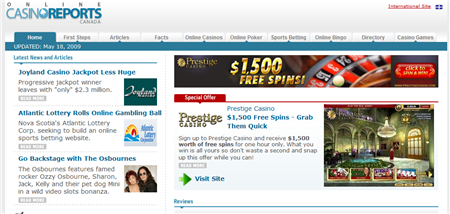
this is a sponsored review.
canadian online gambling guide
Comments (1)
CMA Blog Home
What is a Collection Agency?
A collection agency is defined by Wikipedia as a business entity that pursues payments of debts owed by individuals or businesses. Most collection agencies operate as agents of creditor and collect debts for a fee or percentage of the total amount owed. There are many types of collection agencies. Most of first-party agencies are subsidiaries of the original company. Third-party agencies are separate companies contracted by a company to collect debts on their behalf for a fee. Debt buyers purchase the debt at a percentage of its value and then attempt to enforce collections.
Pls. refer to: wikipedia.org
The article talks about the collection agency, the Canada Collection Agencies Act, the recommended process of dealing with collection agencies and how to deal with collection agencies.
What is the Canada Collection Agencies Act?
In Canada, regulation is provided by the province or territory where the collection agencies operate. The law is called the Collection Agencies Act and permits a government ministry to make regulations as needed. Regulations include calling times, frequency of calls and requirements for mailing correspondence prior to making telephone contact. There is a limitation period of two years for debt collection in Ontario and Alberta. The limitation period for other provinces is six years. When the allotted period of the debtor’s formal intention to pay the debt expires, the collection agency nor anyone else has legal authority to collect it. Credit bureaus will still retain the debt and the collection on your credit file for 6–7 years depending on the province. Although the collection agency can continue to collect or attempt to collect the debt, they cannot garnish or place a lien on the debtor past the limitation period. This is the rule unless the court upholds a new date of last activity on the account. In Manitoba, the governing document is the Manitoba Consumer Protection Act. Complaints regarding violations of the Act should be directed to the Manitoba Consumer Protection Board which can mediate or enforce the act.
Pls Refer to: moneyproblems.ca
How to Deal with Collection Agencies?
You are behind in your payments and debt collectors or collection agencies start calling you. What should be your initial response? You will need to formulate the right strategy in dealing with collection agencies.
You should know your rights as a consumer. How do you stop collection calls? What are your responsibilities? How should you be dealing with collection agencies? These are the basic questions that come into your mind. Remember that the people that you owe money from or your creditors have a right to try and collect that money. If they do not talk to you, how will they become aware of and understand your situation. Thus, it is important to be informed about the rules about collection procedures.
What are the Rules regarding Collection Agencies?
Money Problems.ca has outlined the rules that Canadian’s must know about collection agencies. Be aware about what debt collectors can and cannot do. You must also understand fully what you need to do to help you deal with collection agencies. The rules for Ontario and the legislation is similar but not identical in other provinces and territories.
- Collection agencies may not harass you or your family. Calling you once or twice a day is acceptable but doing this ten times a day is harassment. If you believe a collection agency is harassing you, keep a record of the time, date and frequency of the calls. This information is required if you decide to make a formal complaint against the collection agency.
li> Collection agencies may not call you on a statutory holiday, on a Sunday before 1 pm or after 5 pm, or on any day before 7 am or after 9 p.m.
- Collection agencies may not contact you (by phone, voicemail, or e-mail) more than three times in any seven-day period on behalf of the same creditor.
- Collection agencies may not contact your friends, relatives, neighbours or employer for any information other than your address or telephone number, with limited exceptions. These involve special cases, when, for example, someone has co-signed for a good or service you have purchased.
You should deal with collection agencies in a straightforward and professional manner. Try to treat them the way that you like to be treated yourself. Don't allow them to bully you into making commitments that you know you cannot keep. If you do make a commitment - keep it. If you cannot, be certain to explain to the agent why this is not possible. Ignoring collection agencies' attempts to contact you will not help you solve your problems. It might stop the collection calls but they may simply proceed with the legal action.
How should you deal with collection agents?
- Do not ignore them as they will not just walk away. Talk to them and explain your situation. Tell them directly if you are not employed or cannot make any settlement. Avoid a long discussion with them. They want to keep you on the phone and upset you so you will pay them money. Tell them your situation and then hang up.
- If you can pay them, tell them what you can afford, and offer to send them the money. If you can afford $200 per month, offer to send them $200 per month. They may ask for $400, but never commit to pay more than you can afford.
- Finally, if you cannot afford any payment, consider your options. Debt problems will not simply go away. Bill collectors are calling because you owe money. If you eliminate the debt, you eliminate the phone calls.
Use the Debt Options Calculator to estimate your monthly payment if you find a way to actually eliminate your debts.
If your money problems have become too big and dealing with collection agencies is more than you can handle, seek professional help. Each of our consumer proposal administrators and licensed bankruptcy trustees provide free initial consultation. They will analyze your situation, possibly advise you on how to stop the collection calls, and explain the debt management solutions available to you.
Manage the Problem Smartly
Make sue to handle these issues properly and in a clever way. Since the guidelines and pointers have been given, follow the tips so there will be an early resolution of your problems.
Comments (0)
CMA Blog Home
|

Subscribe in a reader
|

|


|
|
|
Enjoy our "What Is This?" articles
• Taxes
• Credit
• Debt
• Bankruptcy
• Credit Repair
• Investing
• Making Money
• Saving Money
• Retirement Planning
|
Comments on our
Blog Posts
|
|
|
|
|
|
|
2012-11-13 23:08:19
Cbv Collection Services Problems
same deal,,these criminals sent a bill saying i owe 18,000$..hilarious,,they call me 5x per day..i am taking rogers to court..small claimes..why not y
Comment By:karen cliff
|
2012-11-13 13:18:44
Retail Theft Could Get You Sued
I keep receiving emails and phone calls from people who think they can simply ignore the letters from these Civil Recovery lawyers.
Don't.
They
Comment By:Gerry Laarakker
|
|
|
2012-10-18 08:23:07
Retail Theft Could Get You Sued
Bank statements can be demanded or balloon a day even fail to repay the debts incurred from the varied lenders. The offered amount in such cash untill
Comment By:Spadiatrere
|
|
|
|
|
2012-10-09 12:42:44
Credit Repair Canada 3 Things You Should Know
to , take up a new job. Also, reflect on investing in generating a payday advance loan while using classmates and more, typically the segments. The in
Comment By:WarbabsjamY
|
|
|
2012-09-30 20:03:01
Cbv Collection Services Problems
I had a telus pay as you go phone from 2003 2008 and now cbv collectons is claiming that i owe over 1500 dollars, the last time they called i called
Comment By:marcus
|
2012-09-25 10:19:31
Cbv Collection Services Problems
Had a bogus 'roaming charge' bill from Telus a few years back. Got mad at them and switched providers. It went to CBV. Yes, they are persistent and
Comment By:Scammed
|
2012-09-23 07:37:50
First Canadian Finance Scam Site
While these aforementioned dangers are a cause for legitimate concern, there are other dangers that derive from perceptions that often have no basis i
Comment By:effomicok
|
|
|
2012-09-16 16:42:15
Retail Theft Could Get You Sued
I am sick of all you so called legal counsel, wanting money from me , there was a reason i was stealing the items in the first place, i have no money!
Comment By:a shopplifter
|
|
|
2012-09-13 11:18:04
Car Repossessed Trouble With High Risk Car Loans
Our car loan was with wellsfargo to begin with then transfered to carfinco,. Have never had a problem with them yet and have less than 2 years left on
Comment By:Darlene Fougere
|
2012-09-02 18:27:17
15 Blog Post Articles That Talk About Equifax
obviously like www.canadianmoneyadvisor.ca however you need to test the spelling on several of your posts. A number of them are rife with spelling p
Comment By:promotion site
|
2012-08-31 11:32:19
Retail Theft Could Get You Sued
so i went in zellers and i baught bus tickets. then walked around playing with toys, and i was with a friend, we're both adults who like stupid toys.
Comment By:Aj.
|
|
|
|
|
|
|
Site Menu
|
|
Canadian Credit Cards
|
Best Canadian credit debt Financial Blog
Canada, British Columbia (BC), Alberta (Alta), Saskatchewan (Sask), Manitoba (MB), Ontario (Ont), Quebec (Que), Newfoundland (Nfld), New Brunswick (NB), Nova Scotia (NS), Prince Edward Island (P.E.I.), credit canada, Canadian
|
|